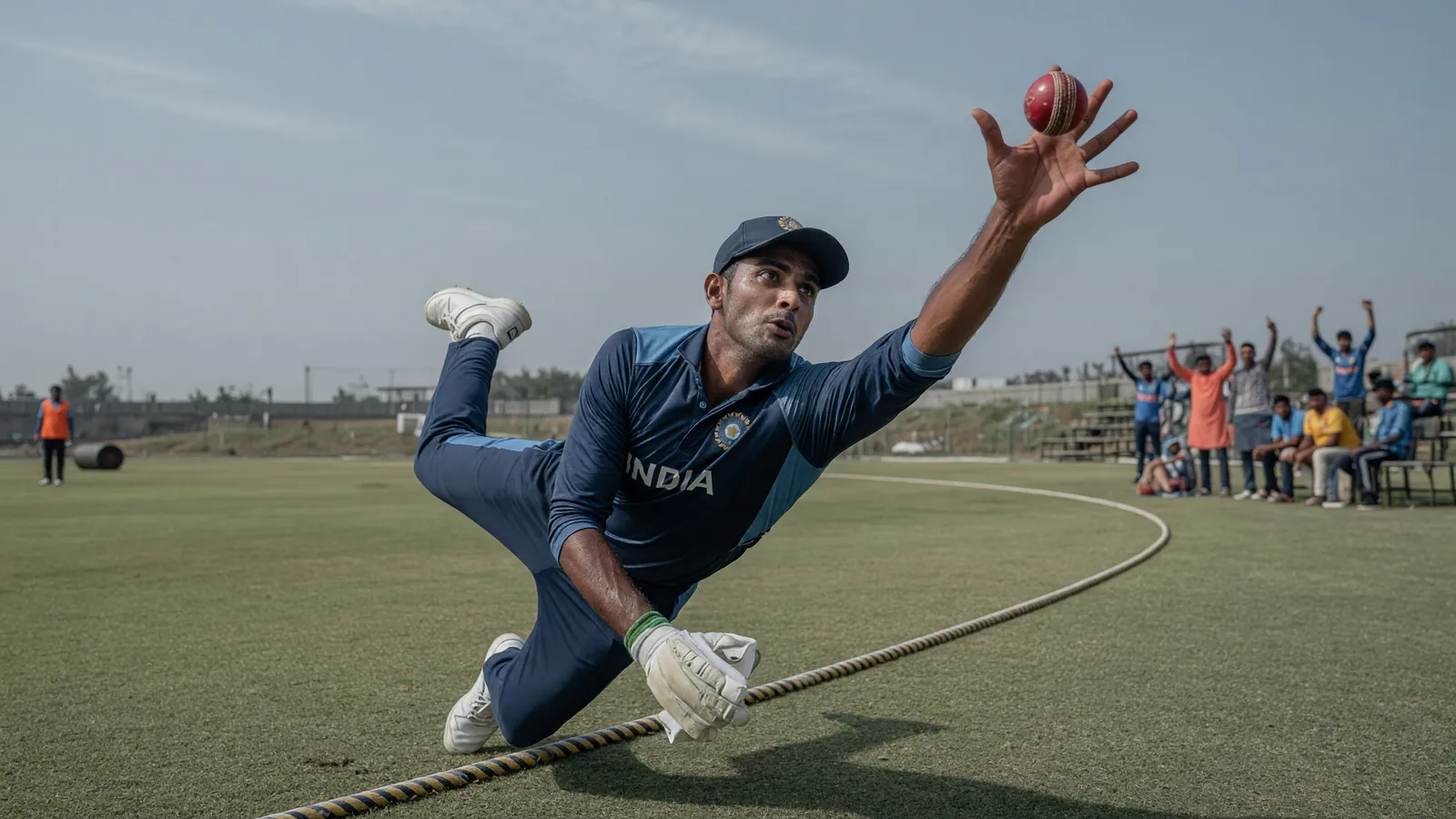
Reading a cricket team for fantasy purposes is a different exercise from reading it as a fan. The fan looks for the star; the fantasy player looks for role clarity, workload and the differential edge. the guide walks through how to evaluate teams and players for Jeeto11 fantasy contests.
Batting role analysis
Batting points come from volume and impact, but the role determines the ceiling. An opener who faces 50 balls in a powerplay scores differently from a middle-order batter who faces 30 balls after the tenth over.

Openers are points machines on flat tracks
An opener who averages 35 in the powerplay over the last six matches is the captain pick when the surface is flat. The points come from the volume of runs and the boundary bonuses, and the captaincy multiplier amplifies them.
On a green seamer, the same opener might face only 15 balls before edging one to the slip cordon. The role does not change; the surface does.
Bowling workload
Bowling workload is the fantasy variable that most readers under-weight. A frontline seamer who has bowled four overs in each of the last three matches is a workload risk; a part-time seamer who has bowled two in each is a differential.
The four-match window
Track the workload across four matches, not one. A bowler who had one quiet match after three heavy ones is a workload rebound candidate; the franchise will want to manage them, which can mean fewer overs or a rest day. Either way, your captain pick needs to reflect that.
Fielding and wicketkeeping
Fielding is the most under-priced multiplier. A sharp catcher who takes three edges in a match adds 24 points without contributing with bat or ball. Wicketkeeping adds stumping points on top of catches, and run-outs where the keeper is the fielder.

Wicketkeeper captain picks
A wicketkeeper who is also a top-order batter is a quiet captain differential. The keeper slot gives you batting points, wicketkeeping points (catches + stumpings), and the captaincy multiplier. Over a five-match window, the keeper captain picks accumulate more total points than the popular all-rounder picks.
The differential pick
Ownership percentage is published inside the contest lobby for every player. The captain pick owned by 8% of contestants is the differential pick. If you believe the player will outperform, the captaincy multiplier on a low-owned pick is the highest expected value in the contest.
Player evaluation checklist
- Role clarity (where they bat, how many overs they bowl, what kind of bowler)
- Workload window across the last four matches
- Surface match (does their skill fit the venue?)
- Recent form (runs scored, wickets taken, catches held)
- Ownership percentage (the differential edge)
Reading the batting order
The published batting order is the most reliable fantasy signal you will get for free. Read it carefully; the order at the toss can shift from the order in the press conference, and the order in the press conference can shift from the order in the previous match.
Three batting-order patterns worth knowing:
- The "anchor at three" pattern: a set batter at number three protects the middle order; the points come from the volume of runs, not the strike rate.
- The "finisher at six" pattern: a hard-hitting batter at six gets 8-12 balls per match; the points come from the boundary and six bonuses, not the run total.
- The "all-rounder at seven" pattern: an all-rounder at seven bowls four overs and bats down the order; the points come from both innings and rarely drop to zero.
The batting order also tells you about the team's intent. A team batting with a top-order anchor is playing for par; a team batting with a finisher at four is playing for acceleration. The captaincy decision follows the team's intent, not the player's reputation.
The keeper-versus-all-rounder trade-off
The hardest fantasy decision is often whether to slot the wicketkeeper or the all-rounder in the captaincy role. Both have multi-innings upside; both have variance.
The wicketkeeper captain pick wins on three nights: green seamers where the keeper takes catches behind the wicket, slow turners where the keeper takes stumpings, and any night when the bowlers bowl full spells and the catches come in volume. The wicketkeeper captain pick loses on flat tracks where the batting is dominant and the bowling is rotated.
The all-rounder captain pick wins on three nights: bouncy seamers where the all-rounder extracts extra bounce, dew-heavy chases where the all-rounder's batting is the differentiator, and variable-bounce tracks where the all-rounder carries both innings. The all-rounder captain pick loses on specialist-bowler nights where the all-rounder's batting is not needed.
Use the venue archetype from the match predictions framework to choose between the two slots.
The credit-efficiency score
The credit-efficiency score is a quick way to compare players within a credit budget. It is the player's expected fantasy points divided by their credit value. A player with 50 expected points at 10 credits has a credit-efficiency of 5.0; a player with 30 expected points at 6 credits has a credit-efficiency of 5.0.
The credit-efficiency score is not the only input; it does not account for role constraints, team constraints, or captaincy upside. But it is a quick way to spot value. A player with a credit-efficiency well above the team average is over-performing their credit value; they are the differential picks. A player with a credit-efficiency well below the team average is over-priced; they are the players to drop.
The credit-efficiency score is most useful in the 24 hours before the contest. The expected points are calculated from the surface, the opposition, and the recent form; the credit value is published in the lobby. The arithmetic is five minutes per player; the team selection is fifteen minutes.
When to captain a bowler
The default captain pick is a top-order batter; the differential is often a bowler. Three nights when the bowler captain pick is the right call:
- Green seamer with a frontline quick taking the new ball. The new-ball spell is the highest-upside spell of the match; the captain multiplier on a wicket-taking spell is huge.
- Slow turner with a frontline spinner bowling in the middle phase. The middle-phase spell is where spinners dominate; the captaincy on a spinner who takes three wickets in the middle phase is the tournament-winning pick.
- Death-overs specialist on a flat track. The death overs are where wickets fall on flat tracks; a death-overs specialist who takes two in the last four overs scores more than a top-order batter who scores 40 off 30 balls.
The bowler captain pick is a calculated risk; the variance is higher than a top-order batter captain pick. But the upside is also higher, and the differential ownership is the path to the top of the leaderboard.
Five player archetypes for fantasy purposes
Five archetypes that describe most fantasy cricket players, with the captaincy implication for each:
- The anchor. A set batter who bats at three or four and plays the long innings. Captaincy points are high when the anchor scores a fifty or a hundred. Risk: slow strike rate.
- The accelerator. A hard-hitting batter who bats at five or six and clears the ropes. Captaincy points are high when the accelerator gets 8-12 balls and scores 20-30. Risk: low volume of balls.
- The frontline seamer. A bowler who takes the new ball and bowls in the powerplay. Captaincy points are high when the seamer takes 2+ wickets in the powerplay. Risk: economy-rate penalties.
- The middle-phase spinner. A bowler who bowls in overs 7-15 and exploits the surface. Captaincy points are high when the spinner takes 2+ wickets in the middle phase. Risk: dew can neutralise the spinner.
- The all-rounder. A player who bowls four overs and bats in the top seven. Captaincy points are high when the all-rounder contributes from both innings. Risk: dual-role rotation.
The archetypes are not mutually exclusive; some players straddle two. The archetypes help you think about captaincy upside and risk at a glance, before you run the numbers.
Related reads: IPL guide · Match predictions · Points reference