The most reliable signals in fantasy cricket research are unglamorous. The pitch, the toss, the dew forecast and the workload window tell you more than any star-pick consensus. the guide walks through how to read each input and how to weight it inside the captaincy decision.
Reading the pitch
The pitch is the single most reliable signal. Walk the surface in your mind forty-five minutes before the toss. Look for grass cover (helps seamers early), dry cracks (help spinners later), and the colour transition between the square and the outfield (tells you how the curator has been treating the surface).
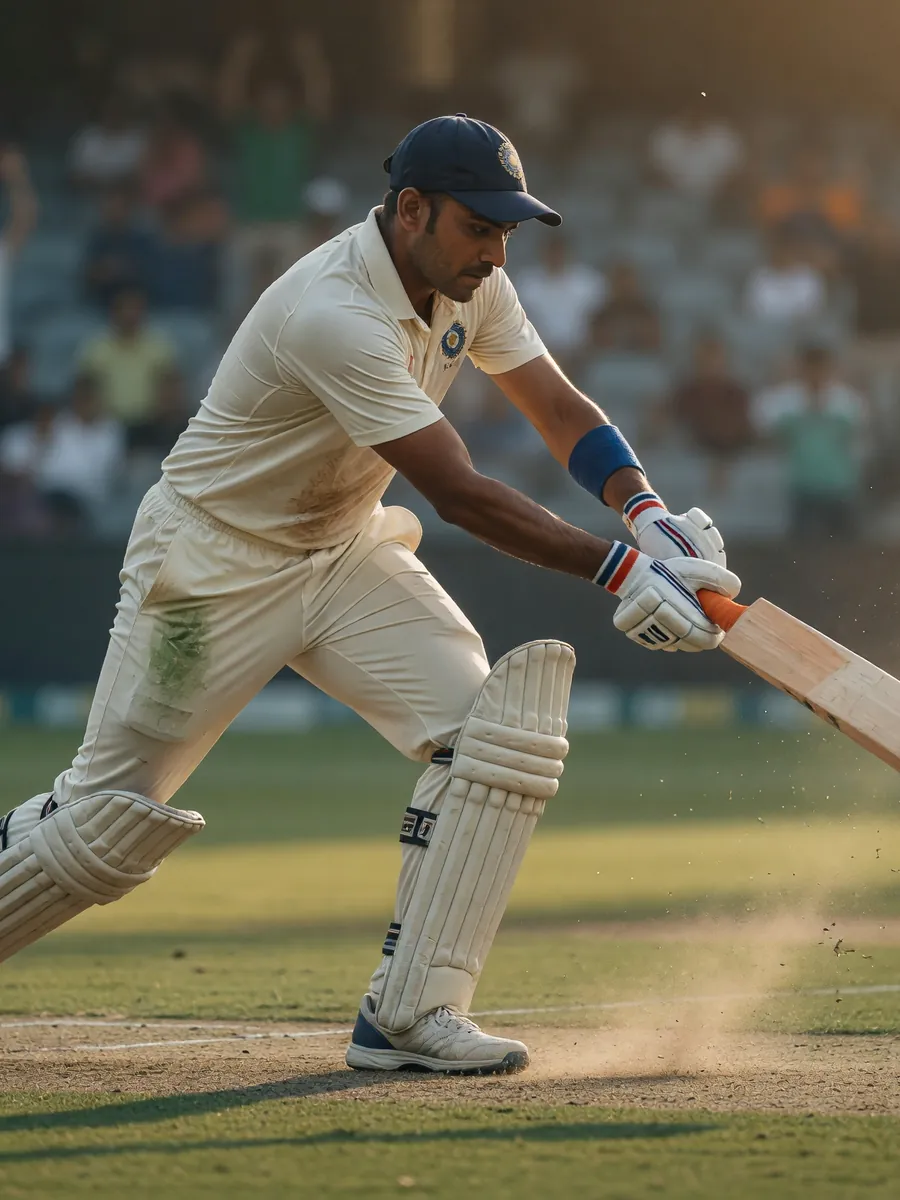
Surface reading in three lines
- Green seamer: pace bowlers dominate the first innings; batting points cluster at the top of the order.
- Dry square: spinners come into play from the tenth over onwards; the second-innings chase is harder.
- Flat track: par score is high; batting depth matters more than bowling variety.
Toss impact
Toss impact varies by surface and format. On a green seamer, the captain who wins the toss usually bowls first and chases under lights with the harder ball. On a dry square, the captain who wins the toss usually bats first and posts a par score that holds.
The chase-or-defend decision
Across a five-match window in the IPL, teams chasing win roughly 55% of matches when the surface is flat and roughly 48% when the surface offers the bowlers anything. The captain pick needs to reflect that. If you expect a chase, your top-order batters and finishers carry the multiplier; if you expect a defend, your death-over bowlers carry it.
Dew and weather
Dew is the late-evening variable that nobody factors into the published points table. A wet ball is harder to grip for spinners and slightly easier for pace bowlers relying on movement. When dew is heavy, expect the chasing team to have an edge in the second innings.
Dew heuristic: if the forecast dew point is above 18°C and the match starts in the late evening, the captain pick usually benefits from the chasing top-order batters.
Form is the input most fantasy players over-weight. Recent runs and recent wickets matter, but recent role clarity matters more. A player who has been promoted up the order, given the new ball, or handed death-over responsibility is more valuable than the same player with the same numbers in a different role.
Role clarity is form
If a player has batted at number four in four consecutive matches, treat them as a number-four for fantasy purposes — even if their official designation is "all-rounder". The role they actually play is the role they score in.
Workload
Bowlers who have bowled four overs in each of the last three matches are less likely to bowl a full four in the next one. Look for patterns across the last four matches, not the last one.
The differential pick
If everyone has the same captain, the multiplier helps you but does not differentiate you. A captain pick that 30% of the contest selected will not lift you above the median. The differential captain pick — a player owned by 8% or fewer — is where the contest is won.
Pre-match checklist
- Confirmed playing XI for both teams
- Pitch report from the venue curator or pre-match coverage
- Toss update within fifteen minutes of the toss
- Dew forecast for evening matches
- Workload window for frontline bowlers
- Differential ownership percentage for captain picks
Venue archetypes
Every cricket venue has a personality that recurs across matches. Recognising the archetype helps you forecast the captaincy decision without waiting for the toss. The archetypes we use:
- Slow turner: spinners dominate from the middle phase; the second-innings chase is harder; captaincy favours spinners who bowl in the powerplay and middle overs.
- Flat track: par score is high; batting depth matters; captaincy favours top-order batters with a high boundary count.
- Bouncy seamer: pace bowlers get extra bounce; short-ball strategy is rewarded; captaincy favours tall fast bowlers who extract lift.
- Green seamer: seamers swing early; batting points cluster at the top; captaincy favours a frontline seamer who takes the new ball.
- Dew magnet: evening matches see heavy dew; the chasing team has a clear edge; captaincy favours the top-order batters of the chasing side.
- Variable bounce: all-rounders carry both sides; captaincy favours an all-rounder who bowls four overs and bats in the top seven.
The archetype is rarely obvious from the published pitch report; the curator's quote usually hedges. Read the pre-match coverage, watch the surface in the morning if you can, and look at the recent results at the venue.
The 7am pre-match reading
A practical rule from the desk: read the pre-match coverage at 7am on the day of the match. The 7am slot is when the curator, the captain and the coach have all filed their comments but the lobby is still quiet. The information density is at its peak; the social chatter has not yet diluted the editorial coverage.
What to look for in the 7am reading:
- The captain's quote about the surface — usually more candid than the curator's
- The coach's note about workload management — usually telegraphing a rest day for a frontline player
- The toss-time weather forecast — dew probability is the most under-weighted variable in fantasy research
- The pre-match fantasy ownership percentages — published in some lobbies 12 hours before the contest
Once you have the 7am reading, set a calendar reminder for 30 minutes before the toss. The reminder is when you lock the team — not before.
The three-day rule for surface reading
For Test matches, the surface reading changes meaningfully each day. The three-day rule says: re-evaluate your captaincy inputs each morning of the match.
Day 1 is usually a batting day on most surfaces. Day 2 is usually a transition day where spin comes into play on dry surfaces. Day 3 is usually the day where the match is decided. Day 4 and 5 are usually result days; the captaincy decision for a Day 4 innings is different from Day 1.
For fantasy cricket, the three-day rule means:
- Re-read the surface reading each morning of the match.
- Re-evaluate the captaincy decision if the surface has changed materially.
- Track the workload of frontline bowlers; if a bowler has bowled 30+ overs in the first two days, the captain pick on that bowler for Day 3 is risky.
The three-day rule does not apply to T20 or ODI matches (the match is over in a day). It applies to Tests, where the multi-day structure creates different captaincy inputs each day.
Building a signal stack
A signal stack is the combination of inputs you use to make a captaincy decision. The stack varies by player, but a typical recreational stack looks like:
- The surface reading (from the venue archetype)
- The toss update and the dew forecast
- The published playing XI for both teams
- The workload window for the last three to four matches
- The differential ownership percentage from the lobby
- The recent form (runs / wickets in the last three matches)
The stack is not a recipe; it is a checklist. Some captaincy decisions will be obvious after one input; some will require all six. The point of the stack is to make sure no input is missed.
The stack also helps with post-mortem analysis. When a captain pick fails, the stack tells you which input was wrong. If the surface reading was correct but the workload was underestimated, the lesson is about workload tracking, not surface reading. The stack separates the inputs cleanly.
Related reads: How the captain multiplier works · Points reference · Teams & players